
Can You Have ADHD Without Hyperactivity? 3 Hard Truths for Black Women

TLDR: ADD is a retired diagnostic term from 1994 that now falls under ADHD as “Primarily Inattentive ADHD.” Understanding the current terminology is important for accessing insurance, accommodations, and treatment.
At 24, I sat nervously in front of a screen and poured my heart out to a stranger I’d never met. It was my first telehealth session, and to my surprise, she confidently responded, “You sound like you may have adult ADHD.”
I chuckled in disbelief.
Maybe I had ADD. I was exhausted most of the time, overwhelmed, and scatterbrained, but I certainly wasn’t hyperactive. Her comment made me wonder: Can you have ADHD without hyperactivity?
ADD vs ADHD: Two Names for One Condition
Predominantly Inattentive ADHD is the new name for ADD and is now recognized as a presentation of ADHD, instead of a completely separate disorder.
The name Attention Deficit Disorder (ADD) has lingered among the public and on outdated psychiatry websites since its official transition with the release of the Diagnostic and Statistical Manual of Mental Disorders IV (DSM) in 1994.
This change in terminology, from ADD to ADHD-PI, recognizes that Attention-Deficit/Hyperactivity Disorder is a neurodevelopmental disorder, with varying presentations of symptoms from inattention to hyperactivity and impulsivity, or both.
| Feature | Old “ADD” (Pre-1994) | Modern “ADHD” (Today) |
|---|---|---|
| Official Name | Attention Deficit Disorder | Attention-Deficit/Hyperactivity Disorder |
| Hyperactivity | Assumed to be absent | Recognized as a subtype (often internalized) |
| Primary Symptom | Pure inattention/distractibility | Can be inattentive, hyperactive, or both |
| Who it described | “Spacey” kids and quiet daydreamers | Everyone with ADHD under one umbrella |
Shifting the diagnosis from two different disorders to one disorder with three specific clusters of symptoms has moved the mental health community’s awareness beyond the hyperactive stereotype we all have grown to know.
Despite this, doctors, teachers, and even early clinical websites continued using ADD long after the DSM retired it, which has helped keep the inaccurate name in circulation.
Many people still use the old term for a variety of reasons: they may have received a diagnosis before the terminology changed, use it interchangeably with inattentive ADHD because of its history, or feel that ADD better represents their symptoms, with the missing “H” (for hyperactivity) marking the difference.
Truth 1: Hyperactivity is Can Be Internal
While I don’t exhibit physical hyperactivity, my mind never stops moving. I lose anything I touch, and it’s nearly impossible for me to follow through on a task that doesn’t align with personal desire or isn’t fueled by urgency.
My brain’s experience with inattentive ADHD can best be described as a scrambled egg, mid-scramble, most of the time.

Does the Name Matter for Your Treatment or Support?
ADD is not diagnosed anymore because it doesn’t exist as a clinical term. If you’re seeking a diagnosis or medication, you’ll be assessed for ADHD with one of the three subtypes: hyperactive-impulsive, predominantly inattentive, or combined.
Insurance companies, employers, schools, and healthcare providers all use modern ADHD terminology, so sticking with the outdated name can create confusion when accessing support.
Whether you call it ADD or ADHD, the actual strategies, accommodations, and treatment options are the same. What matters most is understanding the subtype you have, because awareness of your symptoms informs what approaches will help you function without impairment in daily life.
If you grew up hearing ADD and that’s the term you relate to most, that’s fine, but knowing the current terminology will help you advocate for yourself in clinical and professional settings.
The label itself doesn’t change your brain, but using the right one makes it easier to get on the same page with providers and find support that works.
The 3 Types of ADHD You Need to Know
Three presentations of ADHD are used to describe how symptoms present in each person.
Predominantly Inattentive (PI: Formerly ADD)
Predominantly Inattentive ADHD is more common among women, and is often referenced as the daydreaming scatterbrain. Due to less visible symptoms, like spaciness or forgetfulness, it’s often missed and underdiagnosed until adulthood.

Common Symptoms
- Struggle to stay on task, even when you’re genuinely trying
- Noticeably forgetful, from small daily responsibilities to the important stuff that matters to you
- Make “careless” mistakes, where you look back and question how you missed that
Although ADHD-PI may be seen as more of an inconvenience for others than a disruptor (internal “spaciness” versus outwardly physical symptoms), mental noise and distraction from your brain’s own thoughts make it nearly impossible to filter out what actually matters or to stay focused on one thing at a time.
Here’s a firsthand account:
“So messy. Never did any homework until the last possible moment, and often that meant not completing it or turning it in. Always being told that I was an intelligent girl but I needed to just apply myself… Not listening when spoken to, daydreaming, CONSTANT doodling, pen chewing, hair twirling, desk carving etc when bored in class, always losing things (which I hated), always forgetting to bring home permission slips and plan ahead. Just a lack of ability to organize my time well or really have any sort of concept of time – I just focused on whatever was right in front of me.”
Hyperactive-Impulsive (H/I)
Hyperactive-Impulsive ADHD is what most people picture when they think of the stereotype. Its symptoms are more outwardly prevalent due to physical restlessness and impulsivity.
Common Symptoms
- Difficulty sitting still, fidgeting even when you’re trying to stay calm
- Talking excessively and interrupting others before thinking through what you want to say
- Quickly acts on impulses you may regret later
One person described it this way:
“Fidgeting, readjusting clothes repeatedly, having an inability to get physically comfortable (especially when doing tasks you don’t want to do), having a desire to escape quiet/still settings to go play sports or run or dance, interrupting people, having trouble controlling your volume, transferring your weight between feet when standing…”
Combined (C)
Combined ADHD is diagnosed when there are prevalent symptoms from both the hyperactive/impulsive and predominantly inattentive presentations of ADHD. This is the most commonly diagnosed presentation, and symptoms may shift in intensity depending on context or life stage.
Common Symptoms
- Experiences at least 5 symptoms from both Predominantly Inattentive and Hyperactive-Impulsive presentations, in any combination
- Losing track of conversations while simultaneously fidgeting
- Racing thoughts paired with physical restlessness
A Redditor shared their experience:
“I used to talk heaps. I was never bouncing around, running, disrupting people, etc., but man could I talk. I would get so run away with my thoughts and impatient for a conversation to move along that if someone hesitated I would find myself trying to finish their sentence so the conversation could keep going. On the inattentive side, as a child I would really get into daydreaming. I was never paying attention. I was making up elaborate worlds or massive fan fictions in my head that I would go through while sitting in class.“
If these symptoms sound familiar but you’re still unsure, you can use my ADHD in Women Checklist to compare your experiences.
“It’s Not Just Anxiety”: Why Black Women are Underdiagnosed
Research shows that women are approximately twice as likely to be diagnosed with depression or anxiety in the year prior to their initial ADHD diagnosis. For Black women and girls, these “other” labels (Anxiety, Depression, Bipolar) are where doctors stop looking, adding another layer of invisibility on top of limited access to mental health support.

Why We Go Unseen
By the time we hit adulthood and the world demands more, the pressure becomes impossible to bear. If a doctor only sees the “exhaustion” or the “anxiety” at the surface, they miss that ADHD is driving everything.
Inattention may be severe and debilitating to the person living with it, but if not disruptive to others, it usually gets passed off as:
- Laziness
- Untapped potential
- Carelessness
- Lacking common sense
Black girls learn early to culturally mask through code-switching and messages to perform palatability. Neurodivergence itself is scrutinized and othered under what’s called neuroableism, which is the systemic discrimination against neurodivergent people.
This forces us to bury symptoms twice as deep to avoid being seen as both ‘difficult’ and ‘different.’ I call this Double Masking.
Truth 2: Double Masking is a Survival Tactic
Growing up in a Caribbean household meant high expectations and little room for error. The cultural and societal pressure to be “twice as good” meant that there was no space for “excuses” like ADHD in my childhood, so every day became a battle of hiding what I couldn’t keep up with.
In response, I naturally implemented countless systems to survive.
Many lasted just long enough to finish a task or two, but without the right structure, they’d eventually collapse. Each day felt like trying my best to hold onto sand with open hands, and it just wouldn’t work.
Anxiety and urgency were my only reliable energy sources to actually get things done.
My locker and backpack were a disaster despite my consistent attempts at organizing. Every single day, assignments for classes I even looked forward to were forgotten or magically disappeared. More than half of the week, I’d miss a piece of the dress code at school, like a belt or my ID. You could often catch me racing to finish homework at the breakfast table or in line as we waited to enter class before the bell rang.
This is what it looks like to live with severe undiagnosed inattentive ADHD.
Soon, I was scheming up ways to untuck my shirt just enough to hide that I’d forgotten my belt again to avoid being sent home. I was sneaking out the side door of my house for school in the morning to avoid my mother’s fury about the third replacement key I’d lost that week.
When high school came around, I was the student who faced truancy charges while maintaining all A’s. The judge himself said he had never seen anything like it, but to me, it was simple: I was breaking my neck to keep up while the “Strong Black Woman” trope pushed me into performing strength I didn’t have.
What is Double Masking?
- The Neurodivergent Mask: Hiding the “scrambled egg” brain, the lost keys, and the internal chaos to appear “functional.”
- The Cultural Mask: Hiding any sign of struggle or “weakness” to avoid confirming negative stereotypes and to uphold the “Strong Black Woman” trope.

Truth 3: Giftedness Hides Executive Dysfunction
Twice exceptional (2e) refers to people who are both gifted and have a learning difference or disability.
- The “Gifted” Side: Excelling in standardized testing, systematic thinking, and receiving “commended” scores.
- The “ADHD” Side: A messy backpack, lost assignments, and forgetting my school belt or ID 5 out of 7 days a week.
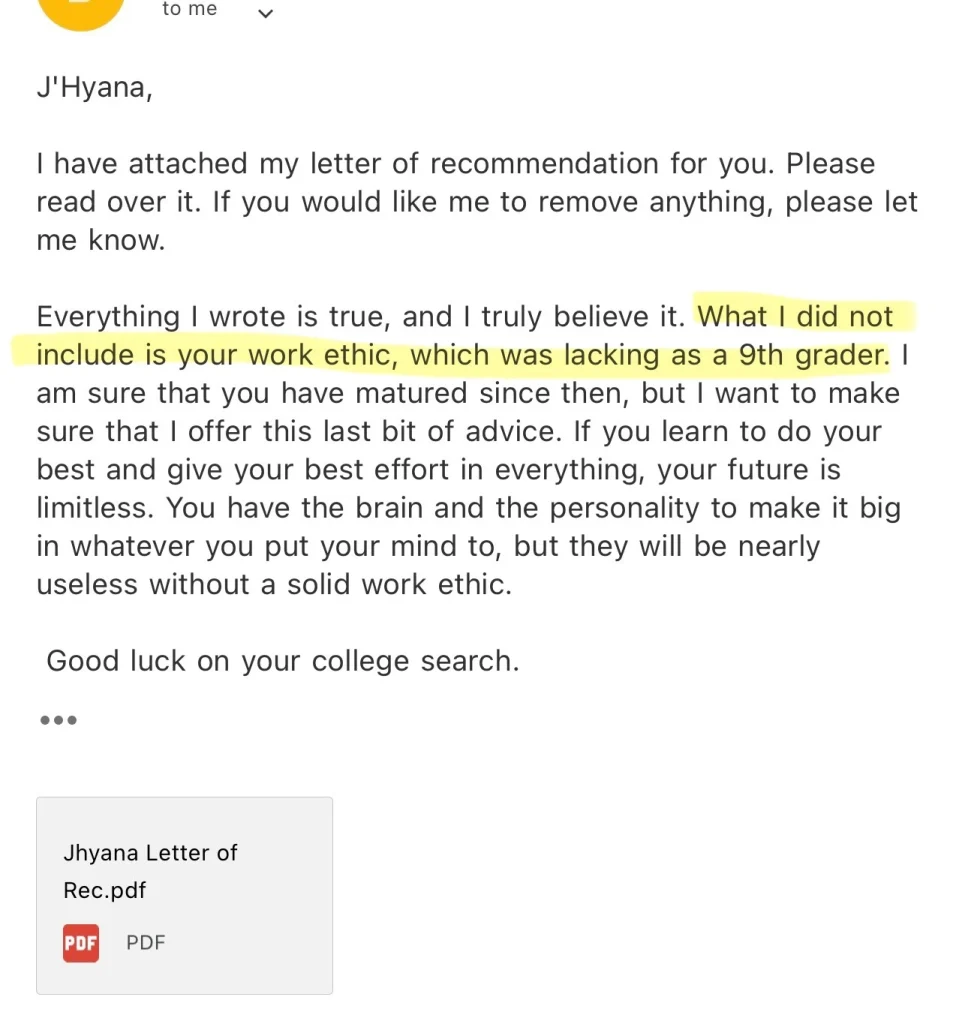
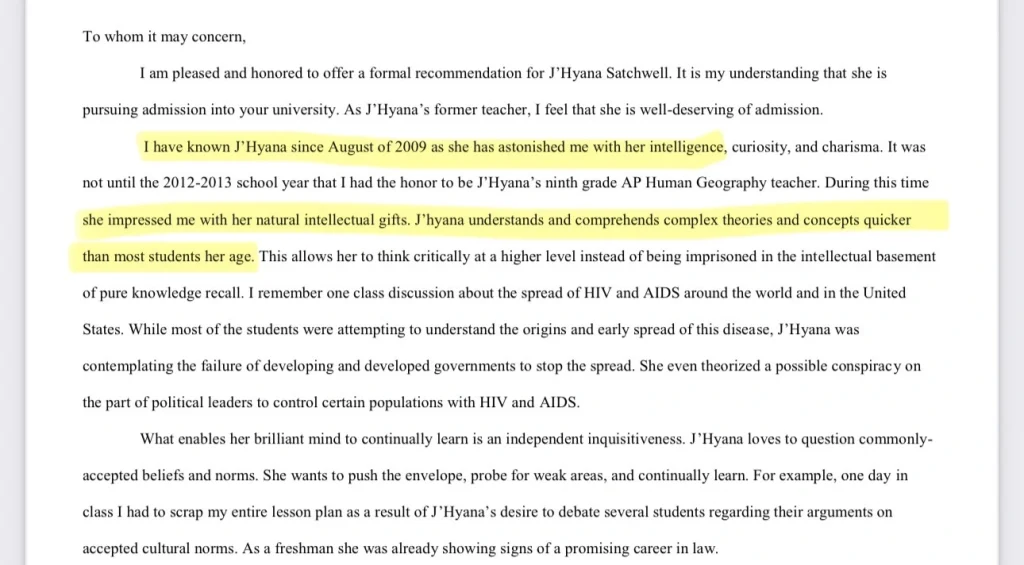
When I first stumbled on this term, it felt like a revelation because it perfectly described the contradiction of my life and made sense of similar messages I’d always received, like that email. What looked like a lack of effort and unreached potential to everyone else was actually extreme stress that just didn’t show up in my grades.
This email confused me and dampened my spirits a bit.
I was anxiety-ridden trying to manage because of my brain’s limited ability to organize, conceptualize, and manage time. I was barely remembering to brush my teeth or put on deodorant before leaving home most days (and imagine the social ramifications of that in middle school).

Takeaway
ADHD isn’t just hyperactivity and is now understood to have 3 presentations: predominantly inattentive (previously ADD), hyperactive-impulsive, and combined.
ADD is an outdated diagnostic term from before 1994 and is no longer used clinically, though you may still hear it in everyday conversation, where Predominantly Inattentive ADHD hasn’t caught on yet.
ADHD-PI is most prevalent in women and least diagnosed in adolescence, which leads to higher rates of misdiagnosis and late diagnosis. Giftedness, also called twice-exceptional (2e) in neurodivergent children, can add to this by masking symptoms in school because high grades hide the scrambled internal struggle.
Understanding the current language around ADHD is more than semantics because it increases access to care when seeking support.
For Black women, this experience is compounded by cultural expectations, creating what I call Double Masking—suppressing neurodivergent traits while also code-switching to meet societal demands for strength and palatability.
If this post left you wondering if you may have ADHD, I highly recommend checking out the ADHD in Women Checklist for a more comprehensive list of symptoms.
Disclaimer: The content on Scatterbrained Sister is for informational and reflective purposes only and isn’t a substitute for professional medical advice, diagnosis, or treatment. Always consult your healthcare provider with questions about ADHD or any other condition. These experiences are personal and may not apply to everyone.